
Friends.
It’s Friday and we’re relaying the foundations.
This week we bring you something special.
One of the UK dons.
PHOTEK
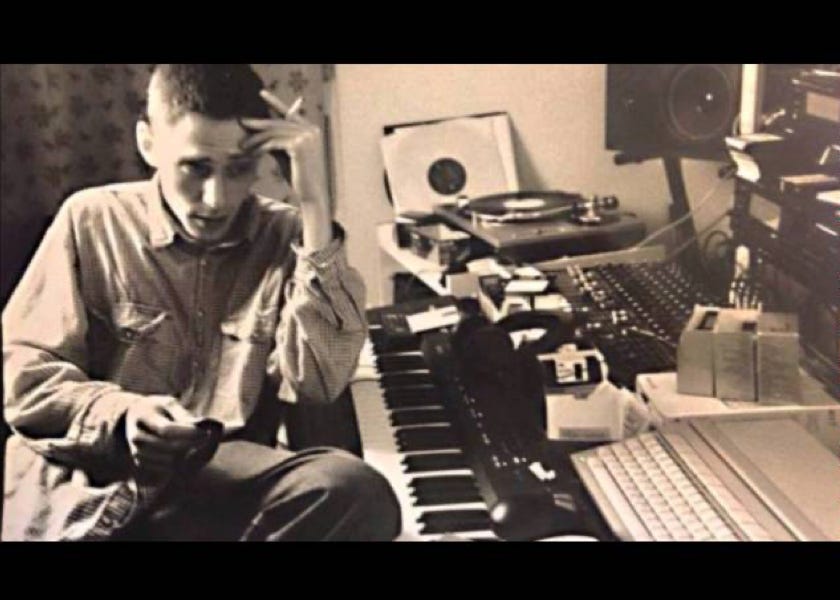
In a musical genre renowned for technical sophistication, Photek has always been recognised, especially by his peers, as the true master engineer of jungle. A man who did more than almost anyone else to elevate the manipulation of sub bass and breakbeats into a genuine artform.
A man obsessed with rhythm and textures of sound, the art of sampling and the deep brooding tension and soulfulness of ‘60s and ‘70s jazz from the likes of Miles Davis. While at the same time being deeply rooted in the modern era of acid house and hardcore.
A true Don of musical taste and vision who can, and does, turn his hand effortlessly to any form of music. As we shall discover.
Rupert Parkes, born in St Albans, England in 1971. Active since ‘93 under a huge range of aliases: Aquarius, Code of Practice, Phaze 1, Special Forces, Studio Pressure, Synthetics, System-X, The Sentinel, The Truper and, of course, Photek the name by which he’s most commonly known.
THE ALIASES
Let’s start at the beginning, shall we.
‘93-’95
When the raging fairground-ride chaos of hardcore was rapidly shifting and evolving into something smarter, taughter, more menacing yet, at the same time, dripping in soul and sophistication. Jungle Techno, the 21st Century Urban Breakbeat sound that defined modern Britain and placed us at the absolute forefront of musical innovation for the next 20 years.
This was a hugely prolific and formative period for Parkes. A time of experimentation and refinement. Producing across a huge number of labels and aliases with a Spartan work ethic, all leading up to the formulation of his Photek Recordings project in 1995.
For the sake of brevity, I will pose myself the almost impossible challenge of selecting a single track from each alias. But with nearly 50 to choose from in this period alone, I’m going to miss something so please make sure to do your own digging…!
Synthetics ‘D400’ (Certificate 18, 1993)
From Parke’s debut EP on the legendary Certificate 18 label. The remnants of hardcore still shining through: a straight kick, simple break loop, bouncing bassline, cheeky rave stabs. Dare I say fun? But with hints of what’s to come.
Code of Practice ‘Can We Change the Future’ (Certificate 18, 1993)
The jungle template is set.
Shimmering breaks, tectonic sub bass, sci-fi aesthetics.
Pure future music. Built around a sample from Future Sound Of London’s ‘Cascade’ single, also from 1993.
Studio Pressure ‘Jump Mk II’ (Certificate 18, 1993)
Early jungle perfection and firm favourite with the likes of Randall and Grooverider.
Make sure to check out the third version, Presha III, released in 1994 which ups the ante even further.
The Truper ‘Volume 1B’ (Street Beats, 1994)
Impeccable. Truly.
Aquarius ‘Dolphin Tune’ (Good Looking Records, 1994)
A thing of beauty. One of a handful of releases on LTJ Bukem’s seminal Good Looking imprint. For most producers this would be a career high, for Photek it’s almost a sidenote.
While we’re talking early Good Looking, you really must know about this, this and this. Golden era business.
System EX - Feel It (Entity Records, 1994)
For me this is the pinnacle of epic, emotionally wrought ‘94 jungle. The human and the machine in perfect unison. A depth of intelligence and sophisticaiton few, if any, can match.
Phaze 1 ‘Natural’ (Timeless Recordings, 1995)
A classic heart-rending rave diva vocal workout in Parkes’ inimitable style. Make sure you don’t miss SOS / Digital’s ‘Spacefunk’ on the flip. Very big 12”.
Photek ‘Into the 90s’ (Metalheadz, 1995)
A down-tempo curveball for you at the end of this section with one of the best chill out tunes of the 90s. The second those chords hit I’m transported to another time and place. Amazing work.
And don’t forget the A side ‘Consciousness,’ one of the tracks that got me into DnB back in the day.
PHOTEK RECORDINGS
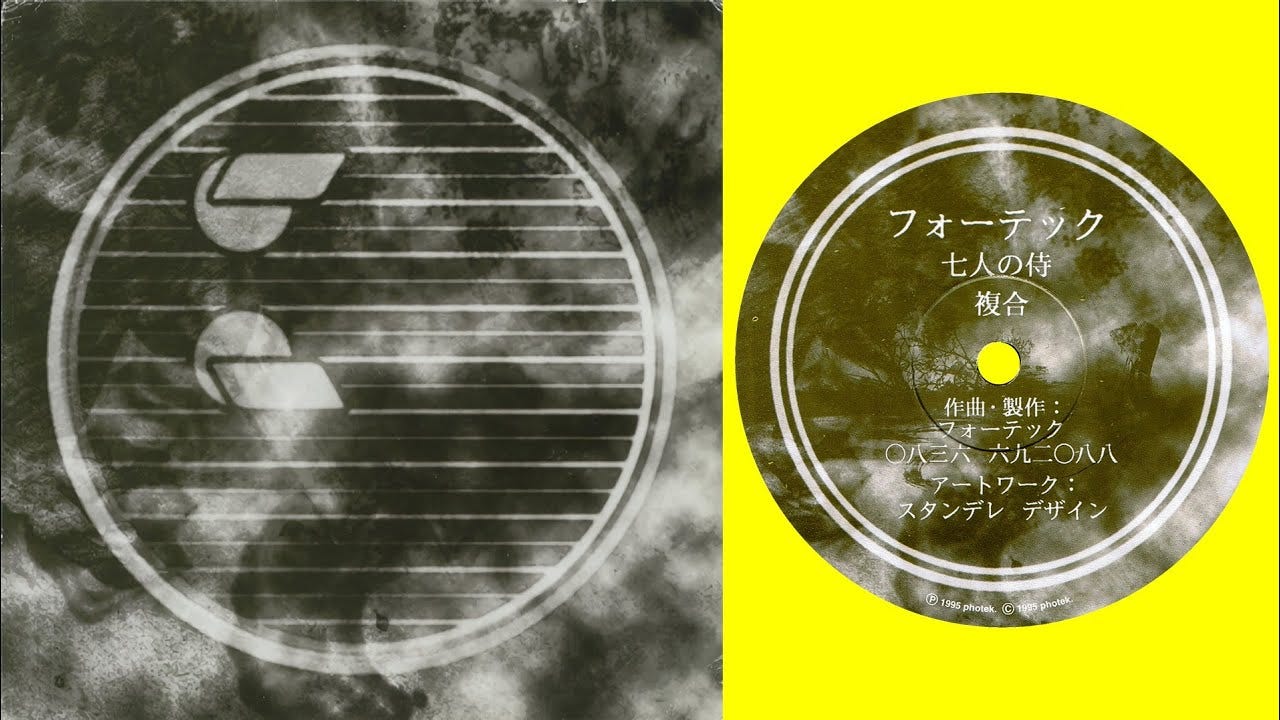
Having laid down a serious creative marker, by ‘94 Parkes was ready to step out on his own with Photek Recordings. A project of distinct visual as well as sonic beauty.
For a glimpse into the creative process behind the scenes make sure to check out this wicked little doc from ‘96. Photek driving around the home counties in a black Ferrari is peak jungle / DnB.
A track from each of the first 6 12”s:
Studio Pressure ‘Resolution’ (Ptk 001, 1994)
Deep, hypnotic, pulsating, restrained. A statement of intent.
Studio Pressure ‘The Lightning’ (Ptk 002, 1994)
Next level drum programming and tweaked out sound design pushing the boundaries.
Studio Pressure ‘The Physical’ (Ptk 003, 1994)
Taught, refined, patient, sophisticated. And rude af. That warping, backwards sub bass… truly next level business.
Studio Pressure ‘The Water Margin’ (Ptk04, 1995)
For me this is Photek’s standout work. Without doubt one of the best pieces of electronic music ever made. The second drop from 3.36… pure, pure class.
Photek ‘Complex’ (Ptk005, 1995)
Sublime work.
Photek ‘U.F.O’ (Ptk006, 1995)
Deep dread, jungle techno rudenessss.
That sample. Those drums. Oh gosh.
MODUS OPERANDI
Released in 1997, Photek’s first LP was a masterclass in the jazz fusion sound he’d been developing for the previous few years. Including some virtuoso excursions into different tempos that gave us some early indications of the new creative direction he was about to take.
Check out the whole thing, it’s a proper listening experience. The kind of album we don’t hear anymore.
Some standouts:
‘The Hidden Camera’
Cinematic and complex.
The soundtrack to a spy movie yet to be made.
‘124’
’The Fifth Column’
The art of fighting without fighting.
A precursor to this gem, released separately the same year.
‘Ni-Ten-Ichi-Ryu’
The Japanese 17th-century master swordsman, Miyamoto Musashi, used the name 二天一 (Niten Ichi - “two heavens as one”) for his fighting technique of using both swords at once. The name 二天一流 (Niten Ichi Ryū) refers to the Niten Ichi school or Niten Ichi style.
What a video…
SOLARIS
His second proper LP (Form & Function being more a compilation of 12”s). Released in 2000. With only one track at 170 bpm, and the rest simmering around the 120-140 mark, as well as some beautiful ambient soundscapes, Solaris came as something of a shock to many jungle / DnB heads.
It probably shouldn’t have, given the clues were there for those paying attention. Case in point: ‘Hidden Camera’ and ‘124’ from Modus Operandi that I shared just a moment ago.
Importantly, this was not Parkes trying to break into a world he knew nothing about. He’d grown up in the classic era of acid house and knew the music inside out. I had the pleasure of seeing him play a house set at The Bomb in Nottingham around this time. I have no idea what tunes he was playing, but no doubt it involved some of >these classics<
As ever, check the whole album.
It’s a perfect Friday afternoon selection.
A few choice cuts:
‘Glamourama’
Simultaneousy one of the classiest and the duttiest house tracks you’ll come across. All about those sub stabs.
‘Mine To Give’
Photek and Robert Owens deliver one of the all time house tracks.
A truly timeless piece of work.
‘Infinity’
Finally Infinity, because it got completely overlooked as a drum and bass tune at the time but it slams hard.
Right, time to wrap things up.
Before I go let me leave you with this gem.
Another 4x4 masterclass from 1996.
‘T’Raenon (Version)’
Some final thoughts.
As Stef talked about last week, the overriding sense I’ve been getting as I put these posts together is that there was a golden era of music through the late 80s, 90s and early 2000s that is somehow being forgotten and eroded. Commercial interests, the internet, increasing wealth inequality, job insecurity, “celebrity DJ” culture, careerism and political game playing are all eroding something perfect and pure. An artform that must be protected.
How many producers starting out today will we look back on in 30 years and see they’ve left a catalogue of work as complete and compelling as someone like Photek, or any of the other artists we cover here every week?
My sense is not many.
This is a problem.
Culture is supposed to advance, not regress.
Things are supposed to get better, not worse.
Why is this happening in electronic music?
Why is this happening elsewhere in our society?
Big questions.
Not be answered here necessarily, or even tackled directly as they are complex and nuanced and we shall see how things moved forward in the coming weeks, months and years.
But there is clearly work to be done.
For now, I hope you’ve enjoyed the music as much as I have.
Have a wonderful weekend, wherever you are.
Peace and love.
Rubin